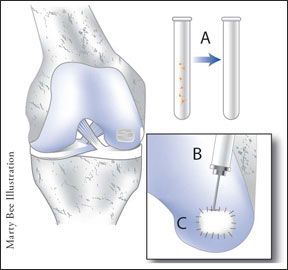
Because there is no cure for arthritis, the goals of controlling pain, minimizing joint damage, and improving or maintaining function have long been the main goals of treatment. But as researchers continue to seek the "holy grail" of therapy-a disease-modifying medication or surgery-they are gaining a better understanding of how arthritis develops, how to target therapies based on an individuals genes, and how to grow new cartilage in ways that may one day slow, if not reverse, the course of the disease. "Were taking strides and moving in the right direction," says Richard Parker, MD, chairman of the Department of Orthopaedic Surgery at Cleveland Clinic. For example, viscosupplementation, which involves injecting a thick fluid (hyaluronate) into the knee to help lubricate the joint, "may have the attributes of being disease-modifying," he says. Its effectiveness in treating activity-related knee pain in studies lasting six months has been found to be comparable to that of nonsteroidal anti-inflammatory drugs (NSAIDs). But it would take a study lasting at least 20 years to determine whether the intervention could actually reverse underlying disease, he explains
To continue reading this article or issue you must be a paid subscriber.
Sign in